|
Cameras
|
|
| Home Page • About • Galleries • Cameras • Hints & Tips • Contact • Links | |
|
Below are the details of most of the cameras I have used. As you will see I prefer manual cameras as they give me complete control. Most of them are now probably regarded as "Classic Cameras", nevertheless they are still capable of performing well today. Many of my photographs were taken with a compact camera. It is a great belief of mine that you do not need a sophisticated camera to be able to enjoy photography and take good photographs - Photography should start from the soul not from the camera...
Click on an image for more details
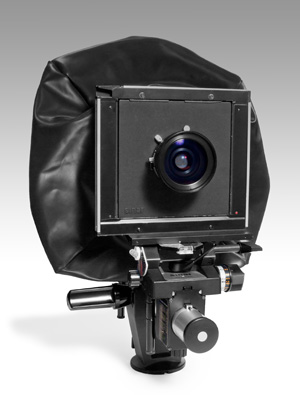
The Sinar F1 (F for Field) large format monorail camera is the simplified version of Sinar’s flagship P1/P2 (P for Perfection) model which makes it more suitable for use on location and in the field. Because of its modular design and compatibility with a large number of accessories – including the latest ones, it is possible to build a camera to your own particular requirements. The large format film size, 4” by 5”, gives an unsurpassed image quality and this type of camera offers the advantage being able to use movements to control the depth-of-field and to correct converging verticals. Sinar’s large format cameras have a precision, simple to operate, quality and a versatility because of interchangeability between major components and accessories. All of this makes them appreciated by advertising and commercial photographers all over the world. A Classic 4 X 5 Monorail Camera. More
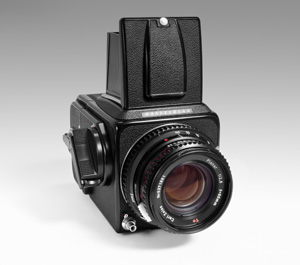
The 500cm was one of the V series cameras designed by Victor Hasselblad. It uses 120 roll film that offers superior image quality over the 35mm format. To prove the good design, versions of this camera were produced between 1957 to 2005 - 48 years! with the 500cm being the model produced between 1970 to 1994. The earlier 500c model was used by NASA on the Mercury, Gemini and Apollo missions before being replaced by the 500EL which had motorized film advance. The quality and the reliability of these Hasselblads make them the best medium format cameras ever made. Simply one of the best cameras ever made. More
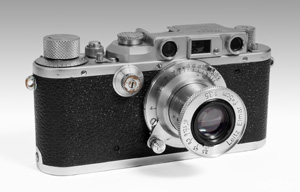
Designed by Oskar Barnack, the Leica Rangefinder camera was introduced in 1932. This was the first ever 35mm system camera with a range of screw mount interchangeable lenses. This series of cameras continued in production until 1960. These cameras have a jewel like precision quality that no other camera has ever had. Using one of these cameras takes you back to the basics of photography. This particular Leica IIIB was made between 1938 and 1939, and even after 70 years the controls and shutter have not lost their precision quality. More
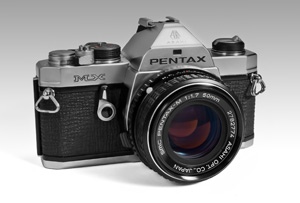
Entering the market in 1976 the MX was in production up until 1985 and was their flagship 35mm SLR for much of that time. It is fully mechanical and totally manual, only relying on its batteries for the through-the-lens (TTL) exposure metering which is indicated by a series of traffic light coloured LEDs in the viewfinder. The selected shutter speed and aperture are also indicated in the viewfinder. Although solidly built it is not to the standard of the Nikon FM, but it does have the advantage of being smaller and lighter. This was my first serious camera and has been my main workhorse over the years. More
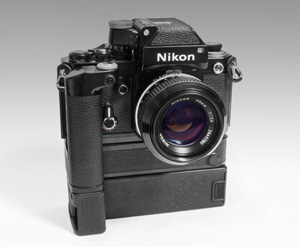
The F2 was “the” professional 35mm SLR in the 1970s and was the gateway to the complete Nikon system of lenses and accessories which, at the time, was the largest available. It was the last of the professional mechanical manual cameras and only relied on a battery for the metering. With the advent of electronics being used in camera design; the F2 was eventually superseded by the F3 in 1980. However, many photographers remained true to their F2s preferring to keep to the proven mechanical technology. The finest mechanical 35mm SLR ever made. More
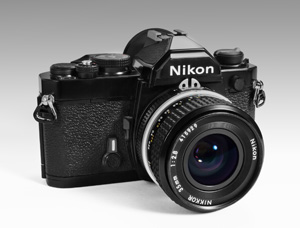
The FM was produced by Nikon between 1977 and 1982 and was marketed along side the renown F2 as a more compact alternative. This is another fully mechanical manual camera, only relying on its batteries for the TTL exposure metering which is indicated by three red LEDs in the viewfinder. The selected shutter speed and aperture are also indicated in the viewfinder. Over time the Nikon FM has proven to be one of the finest and most reliable 35mm SLR cameras ever made. A good solid camera which is a joy to use. More
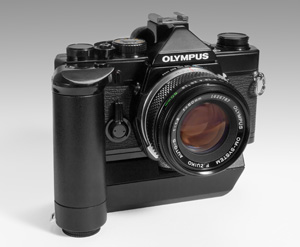
Designed by Yoshihisa Maitani, the Olympus OM-1 was produced to challenge the Nikon F range of cameras by producing a smaller, lighter and quieter 35mm SLR. It was first launched in 1972 as the M-1, but after a complaint from Leica it was renamed the OM-1: the OM-1n is a later version that has extra flash functions. This is an all mechanical manual camera with the batteries only required to power the TTL exposure metering, this being indicated by a needle in the viewfinder. There is no other information in the viewfinder i.e. the selected shutter speed and aperture, unlike the Pentax MX and Nikon FM which have indicators for these settings. A true "classic" camera complemented by the range of excellent Olympus Zuiko lenses. More
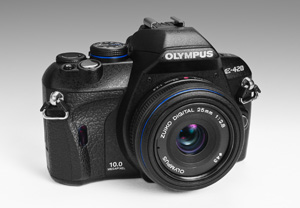
It is a "go anywhere" digital SLR which can use the original range of Olympus Zuiko lenses (with the MF-1 adaptor). More
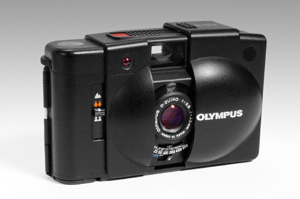
Another design by Yoshihisa Maitani, it was introduced in 1982 as a simplified version of the XA. This range of very compact viewfinder cameras are designed around a sliding clam-shell case which acts as a cover for the lens and viewfinder when not in use. It has a fixed Zuiko 35mm f3.5 lens capable of producing very fine results. It is reliant on two button cells for the programmed exposure system, which can be unofficially overridden by changing the film speed setting to under or over expose. I used this camera in situations when it would be difficult to carry one of my SLRs. More
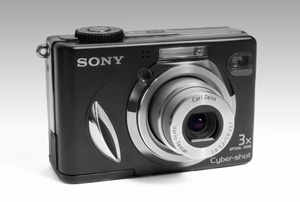
Introduced by Sony in 2005, It is a 7.2 Megapixel digital compact camera with a 7.9 - 23.7mm (equivalent to 38 -114mm in 35mm terms) Carl Zeiss Vario-Tessar lens: Carl Zeiss also produce the lenses for Hasselblad. It has various automatic exposure modes, but can be used manually. The large 2.5" screen on the back is still usable in bright sunlight. Its metal case gives it a very solid feel and it has a retro look about it. This camera continues to amaze me with the results it is capable of producing. More
A camera is just a tool, and like any tool the correct one
must be chosen for the job. Most of my photography is combined with other activities:
When fell walking, I will take a SLR camera with me and
a tripod if I have a specific shot in mind - otherwise I will just carry a compact cameras with me, especially if the weather is bad,
because I have found even the waterproof camera
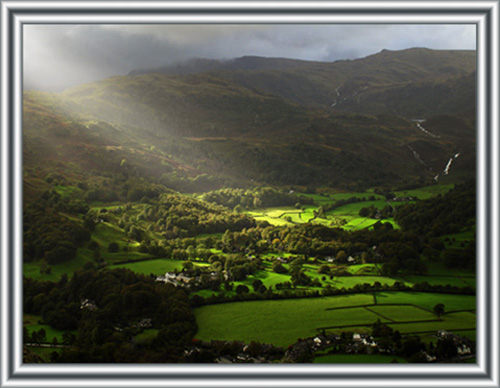
bags let in the rain eventually. Then, if I am lucky enough to see a ray
of light through a stormy sky I can usually capture the scene quickly before it
disappears. These extreme lighting conditions are normally transient and
therefore do not last for long.
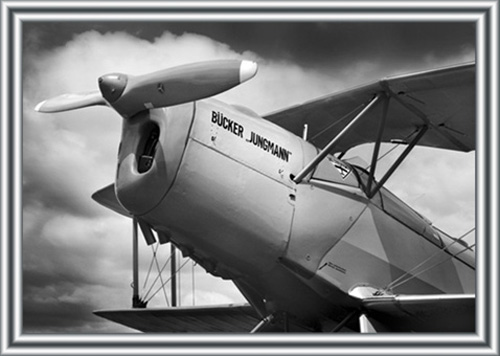
At North Weald I am a volunteer aircraft marshal
for the fly-ins. This gives me a great opportunity to take pictures when I
am not working, but it also means that I cannot carry much equipment. In
this situation I find that the compact cameras come into their own again.
I
don't want to be laden down with equipment - I find by keeping it simple opens
up the mind to the subject. In fact too much equipment can end up getting
in the way of producing images. Most
of my pictures have been taken with a 35mm or 50mm lens (or equivalent depending
on the format), a 100mm macro lens has also been a favourite. More
recently a wide angle zoom lens has become a preferred choice.
I use
Photoshop to process all my images: the ones taken
on film are scanned. I still
like using film and I will continue to do so, along with digital capture – using what I feel is best to
suit the situation.
Learn how to use your camera at my
|
© 2007-2024 Michael Anderson LRPS
All Rights Reserved
|
Home • About • Galleries • Cameras Hints & Tips • Contact • Links • Site Map |
 |
|